A Chat History of Making a Research Figure
The visual evolution of the VHD-Play teaser
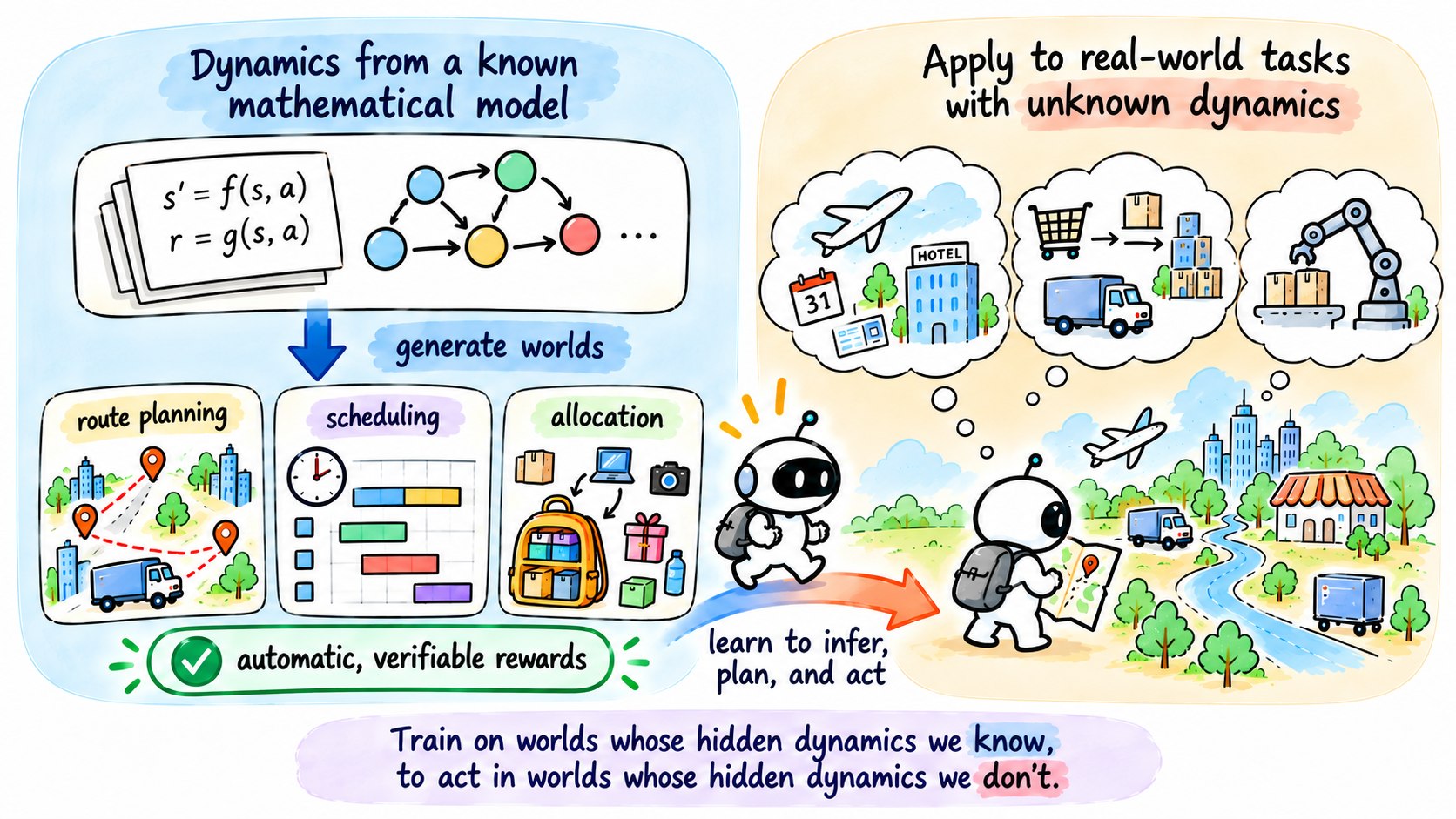
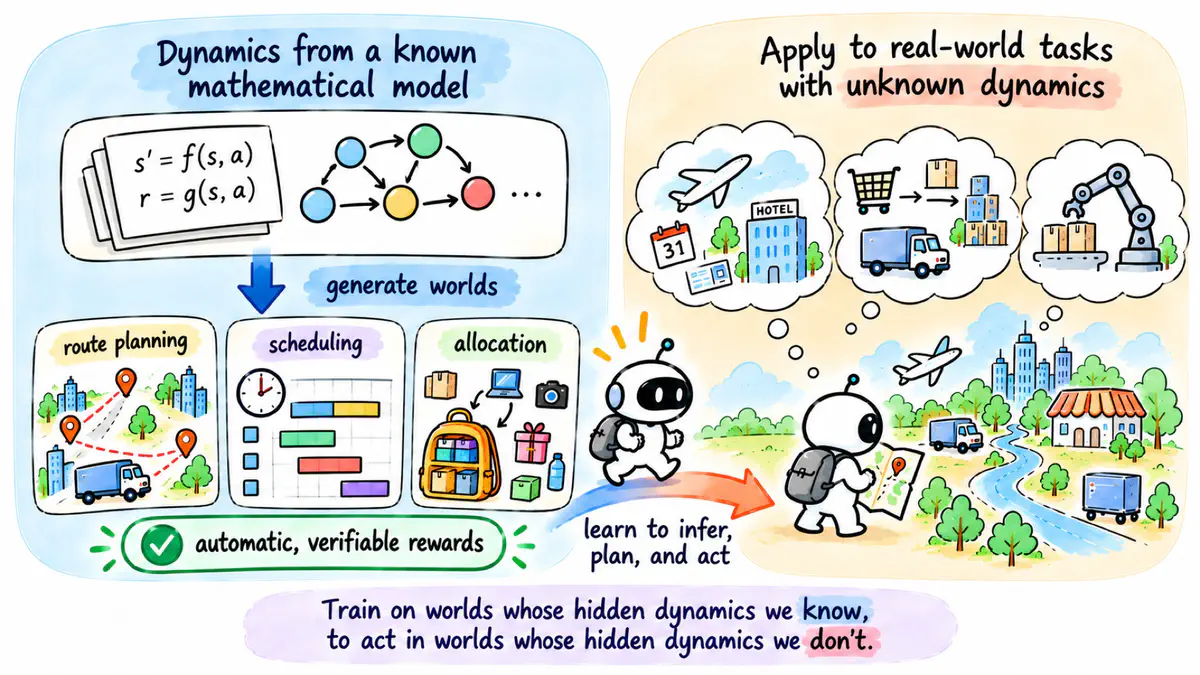 The final VHD-Play teaser figure.
People often ask how I made the teaser figure for VHD-Play. Here is the visual history of the chat, in order.
Chat history
Prompts are reproduced exactly as written.
Initial brief
can you generate a figrue, like we aim to solve real world tasks but don’t have label. we believe there is hidden dynamics of any task, even not explicted can be written. to learn on this, so we generate from know dynamics to envs with verifiable reward, and then we can train and wish to generate to any real world then. this should be our banner or teaser and our main belief . and check this main paper, https://arxiv.org/abs/2609.27321
1. The first version tried to explain everything
@Create image cool now create a clear figure to suggest this belief and 引诱人们读这个paper
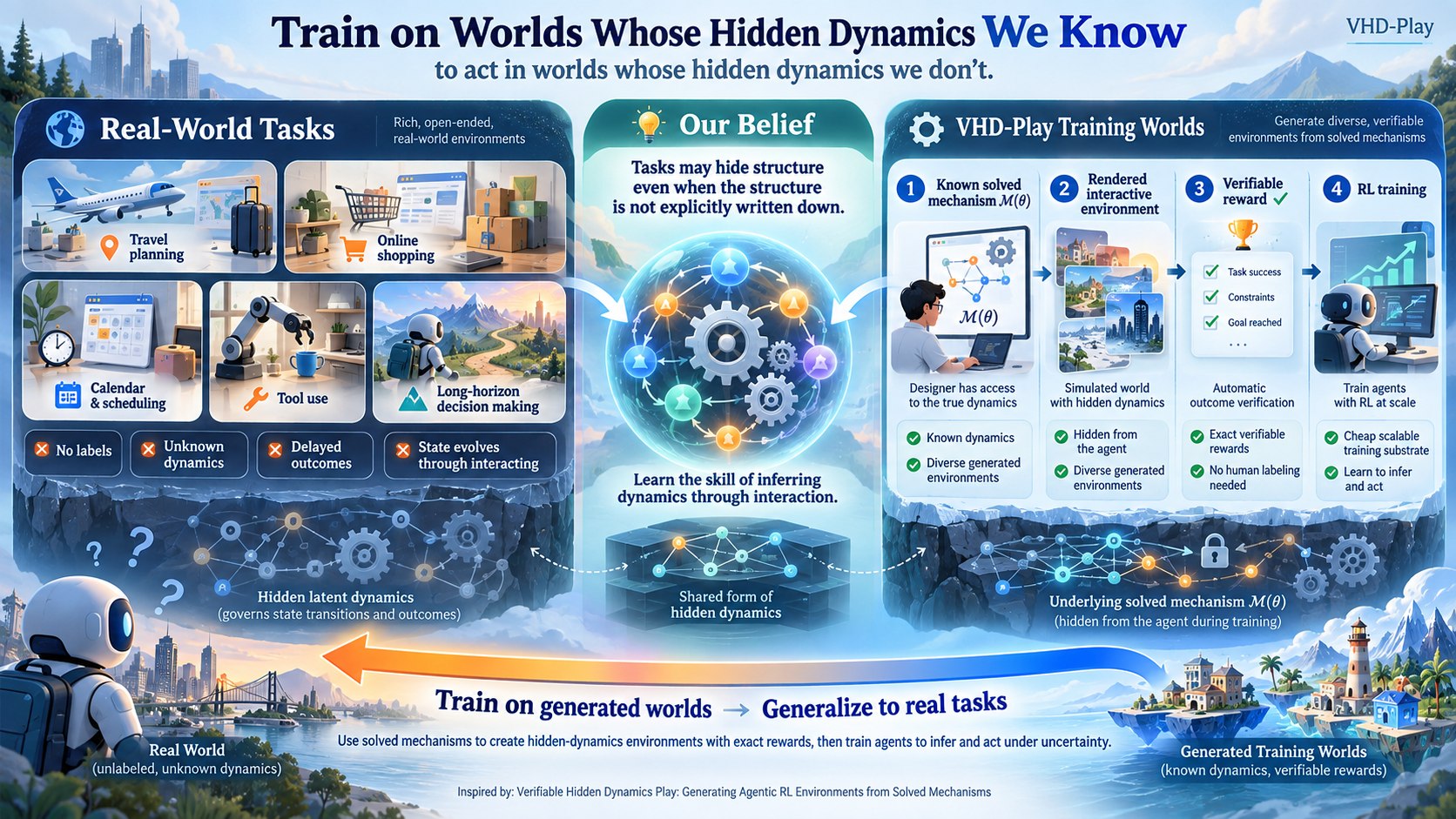
2. Simplify the structure
Regenerated from the same instruction—no new prompt was entered.
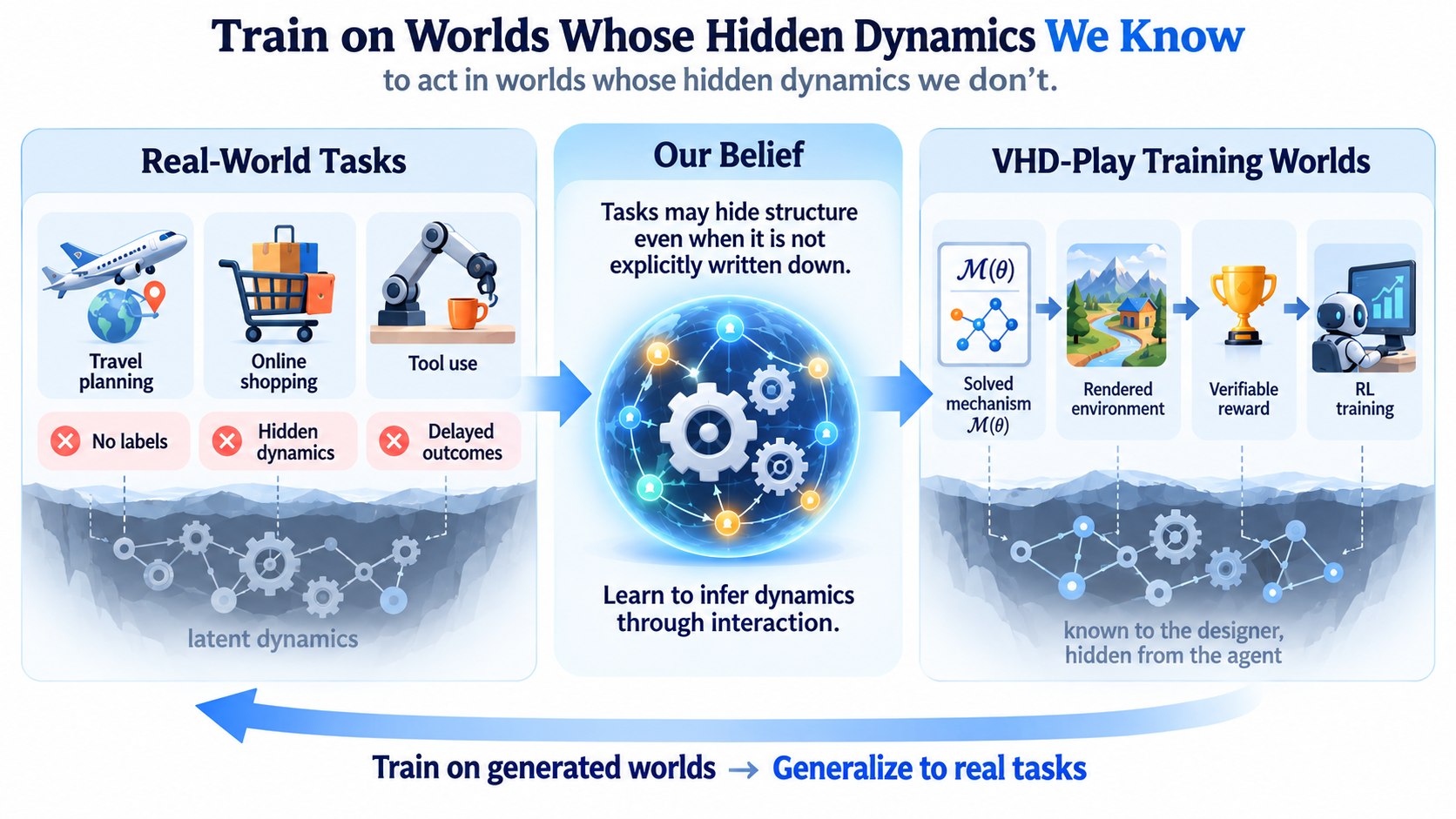
3. Switch to a hand-drawn visual language
good direction, but if maybe more intutive? and use like hand or pencil style?
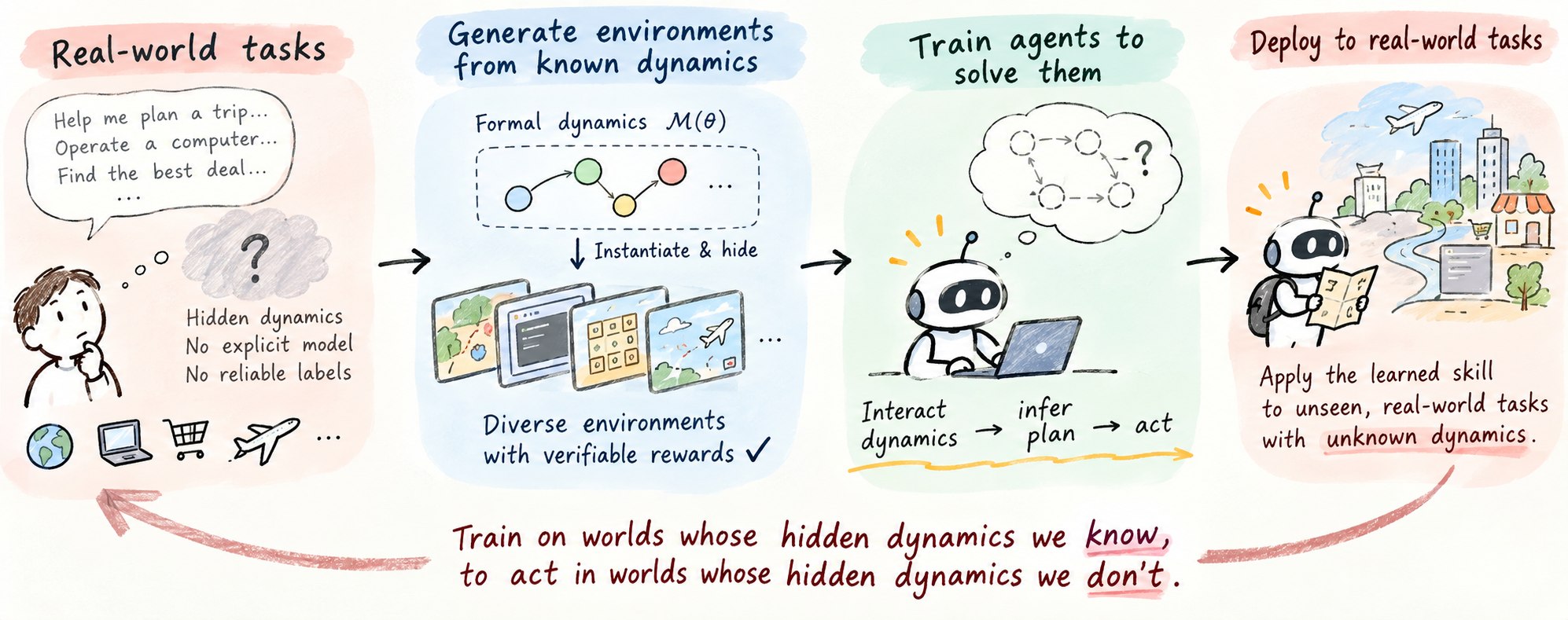
4. Reduce the story to two sides
very good, maybe better stress? right now it seemed more text , like we can still have the two sides sense?
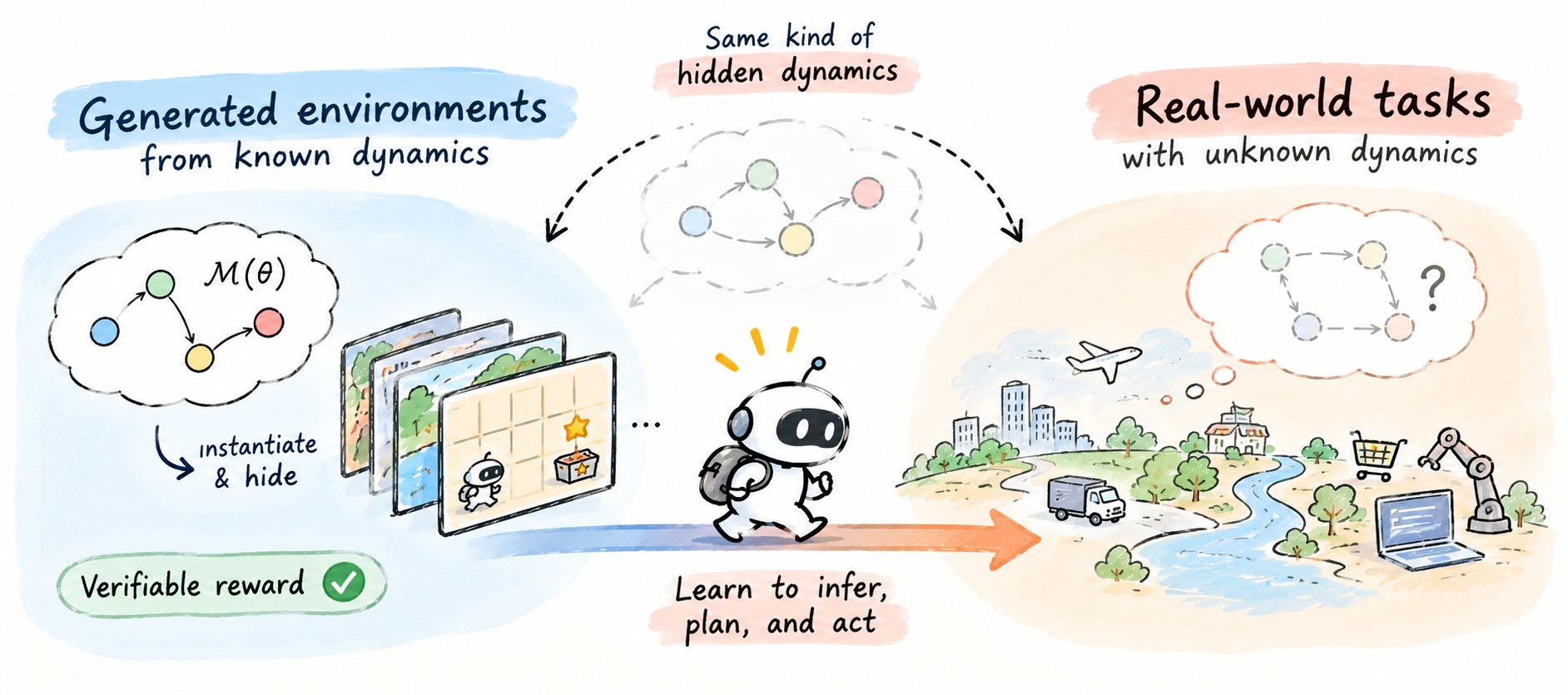
5. Make “known dynamics” concrete
我觉得这个已知的dynamics并不好懂,考虑试试看把他画得一眼能看出来是opreation research?
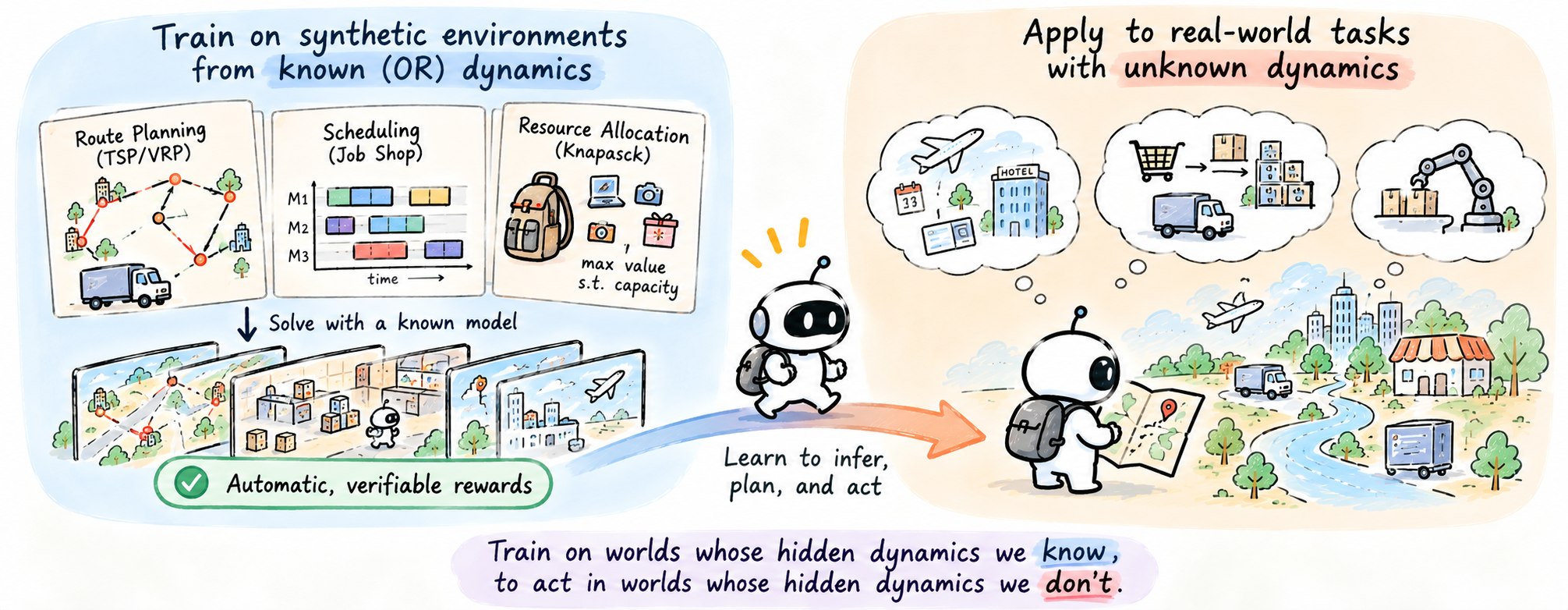
6. Show that worlds come from a mathematical model
but we can’t tell we generate worlds vfrom known dynmaics or math?
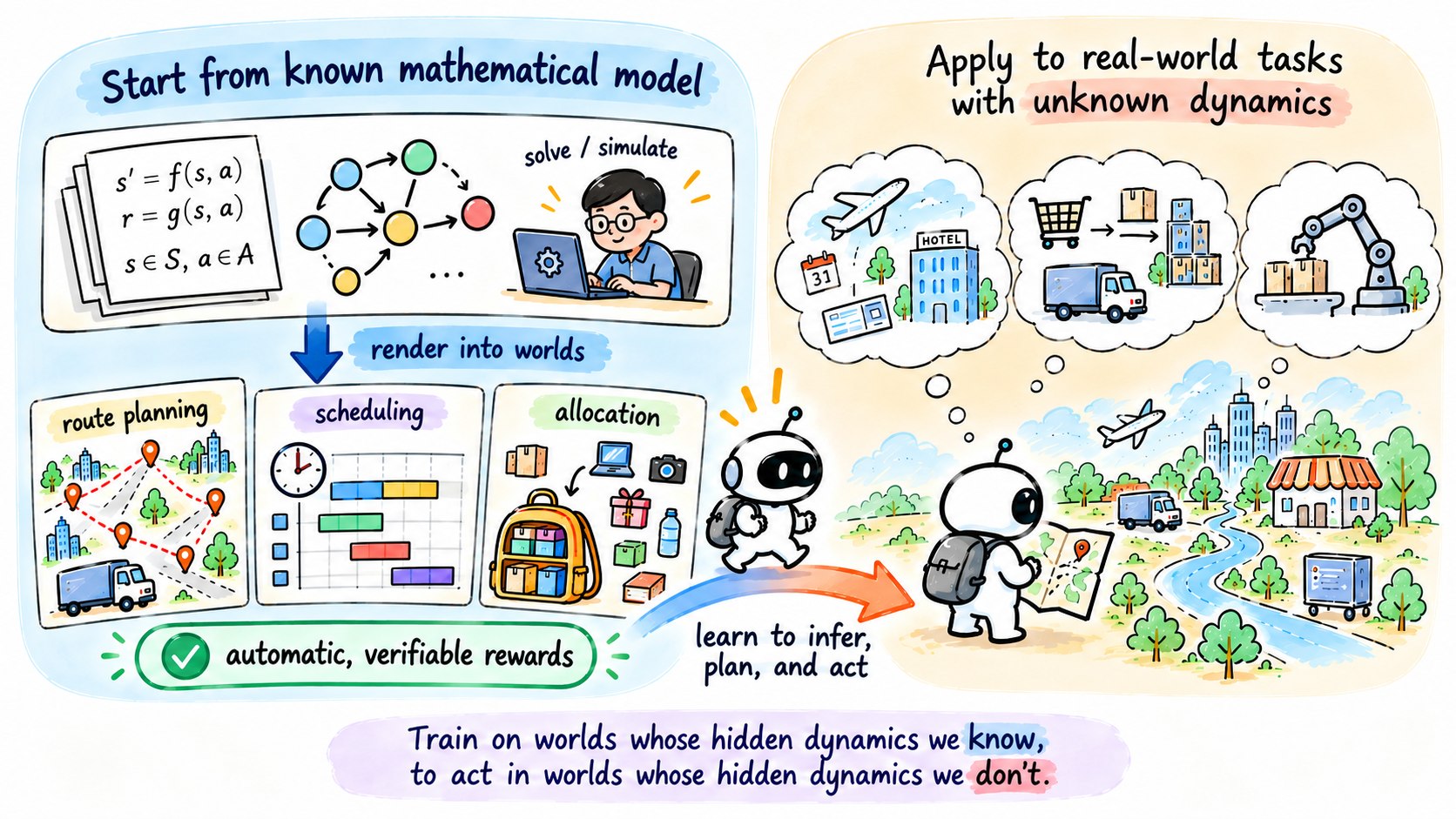
7. Make the causal relationship explicit
math mode;l is the dynmaics of genrated agentic env
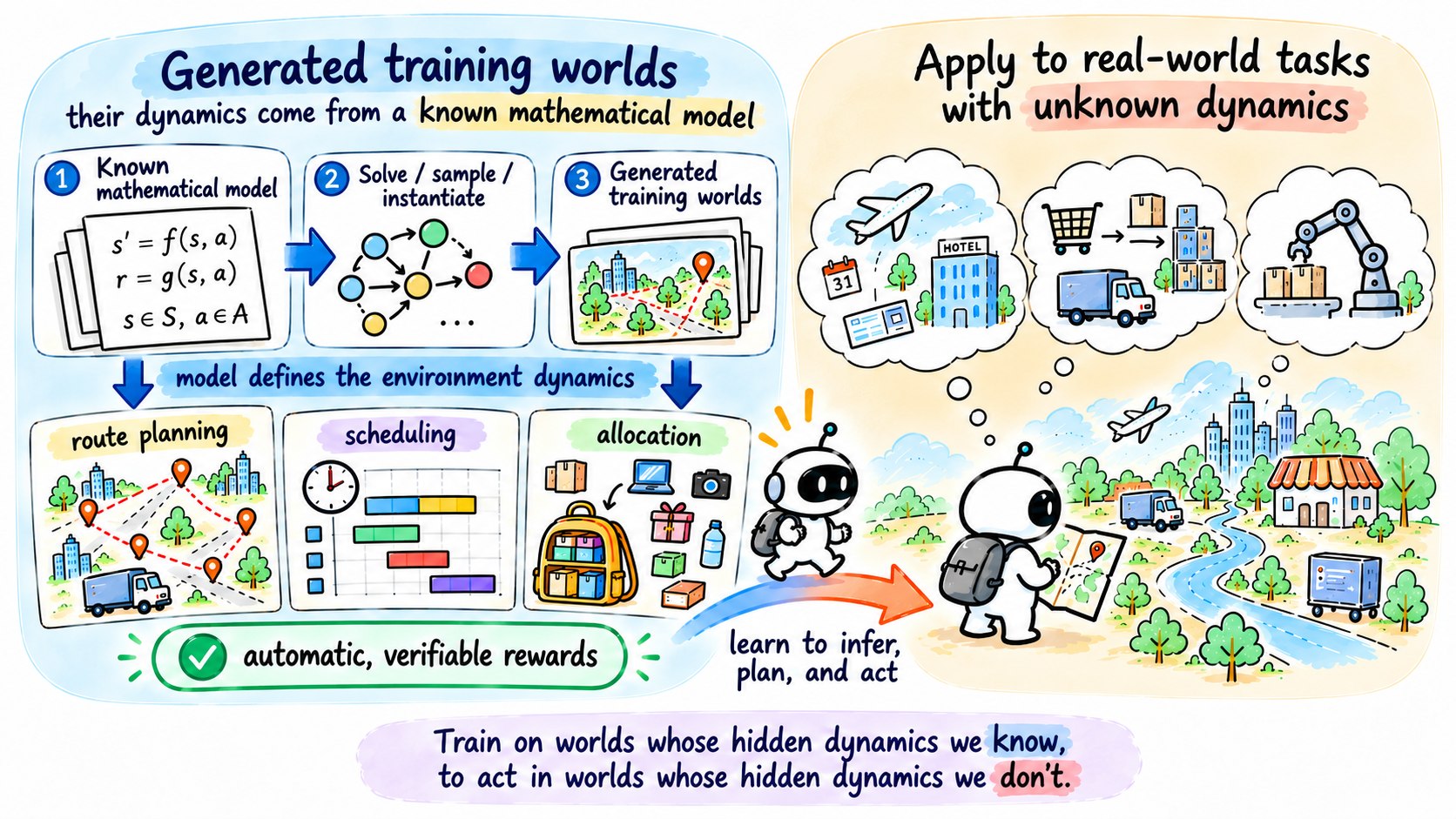
8. Remove the extra scaffolding
this is very very good, exactly what we want. but just curisopu if we can be more consice without losing infor, for example don’t need to draw the 1.2,3 so clearly?
Xinjie Shen 沈鑫杰
PhD Student @ Georgia Tech
I study how to train capable agents and make them safe and reliable in open-ended environments.